In many organizations, essential knowledge lives in handover records, service reports and short notes written by experienced colleagues. Capturing it is an important step. Dependable reuse also requires clarity about what was observed, what was reviewed and which revision was actually approved.
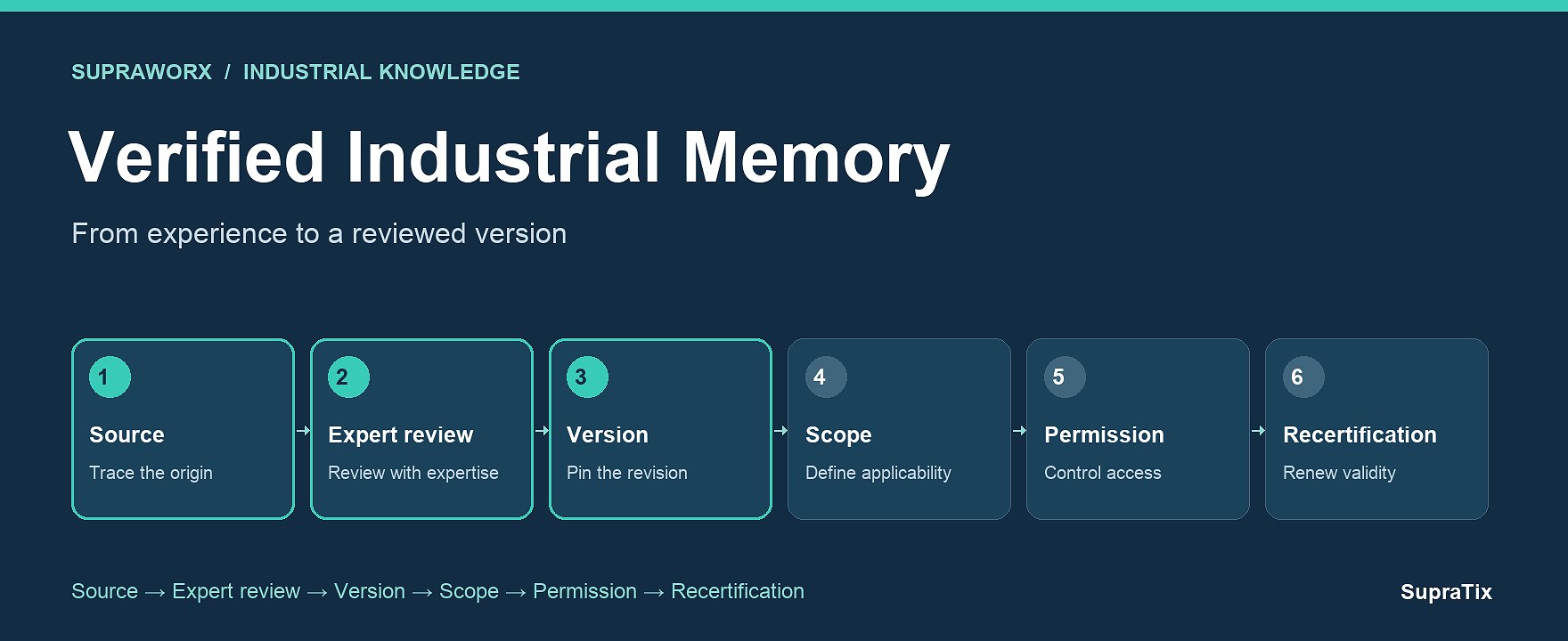
Verified Industrial Memory describes this task in the SupraWorx context through a fixed chain: Source → Expert review → Version → Scope → Permission → Recertification. The first three links prevent a useful note from becoming a supposedly binding instruction without a traceable decision.
The source makes a statement verifiable
A source answers more than the question of a filename. It explains where a statement came from and which situation it describes. For a fault observation, that may include the affected process, the configuration at the time and documented operating conditions. For an SOP, the specific document revision matters.
A reference to a changeable document is not sufficient on its own. If its content is replaced, it must still be possible to distinguish the revision underlying a review. A statement's origin is therefore part of its technical assessment.
Expert review evaluates meaning and boundaries
AI can summarize information and help organize it. Deciding whether a statement is technically sound requires an identified responsibility. The reviewer must be authorized for the task and able to inspect the relevant sources.
Consider a fictional maintenance case: A note recommends an additional visual check after a particular fault. Expert review examines whether the observation is reliable, which components it concerns and whether the recommendation is consistent with the current SOP. The result might be approval, a narrower scope or a request for clarification. Rejecting an unsupported generalization is also a valuable review outcome.
The version binds the decision to the content
The statement “reviewed” remains incomplete unless the reviewed revision is identified. An expert decision therefore belongs to a specific version, together with its sources and conditions. If the content or scope changes, it must be clear that the previous assessment does not automatically cover that change.
The existing SOP architecture in SupraWorx distinguishes document revision, review decision and effective release. This distinction matters for Verified Industrial Memory: A document can have passed expert review without being authorized for use in every operational context.
A useful handover for review
A knowledge entry should answer several questions in understandable terms: What is being asserted? Which source supports it? Which revision does it refer to? Where should it apply? Who made which decision? Which event or date triggers the next assessment?
The level of detail must fit the risk and intended use. An observation about how to investigate a fault requires a different depth of review from an instruction affecting product quality. The common requirement is a traceable relationship between the statement, its source and the decision.
What employees gain
Employees can see why a recommendation is considered usable and where its limits lie. New colleagues can ask more focused questions. Reviewers receive a concrete basis for their decisions. Assistance systems can be designed to present a reviewed revision together with its provenance.
Verified Industrial Memory makes existing experience usable within an accountable framework: connected to expert responsibility, versioned operating references and the next necessary review.
Work with SupraTix to build a traceable review chain for your operational knowledge.